

Generative AI is continuously growing more capable and advanced, allowing industry professionals to streamline their workload and invest in groundbreaking research techniques. AI models can transform simple input prompts into visual content, allowing scientific researchers to explore data in hyper-realistic detail.
Video generative models, in particular, have been crucial to generating original content that brings concepts to life. Scientists are now able to create moving visuals of chemical compounds and molecules when investigating diseases, potentially aiding drug discoveries. For those in the industry – like computer science graduate Jonathan De Vita – this is revolutionary.
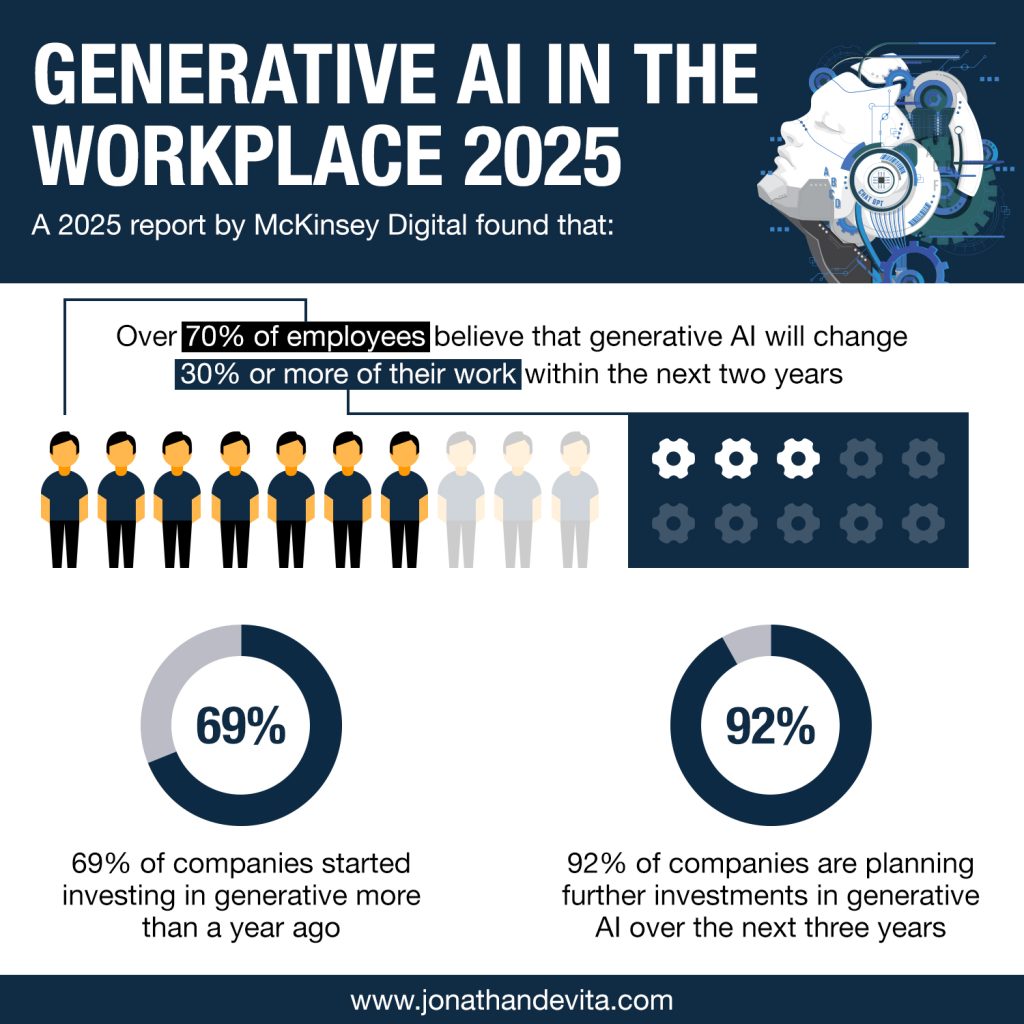
In their youth, these generative AI models could only produce short and simple videos. However, they are now able to learn from large, pre-existing data subsets and pair textual prompts with visual concepts. In molecular biology, these generated videos convey clips of static molecules, allowing scientists to break them down and explore their structures. This is a vital step in drug discovery and development.
AI has become a commodity in the biological and pharmaceutical fields, making it possible for scientists to design entire molecular structures from scratch. This has the potential to completely change how scientists utilise data in research, analysing numerous datasets and predicting outcomes. Complex AI algorithms greatly speed up this process and increase long-term productivity and efficiency.
A huge part of drug discovery relies on accurately analysing molecular dynamics. Molecular dynamics simulations better capture molecular processes and reveal key details like structural changes, binding pathways, and the behaviours of proteins and ligands. This illuminates how drugs will interact with their targets; a development made possible by the increased incorporation of artificial intelligence in the sciences. For more information, please see the embedded PDF.
Video generative models have already begun to transform how scientists analyse molecular dynamics, but there is still potential for further exciting developments. These analytical programs could be trained with multimodal datasets, enabling the creation of more than one type of content. They may also advance enough to be used in synthetic biology to create entirely new molecular models.
Despite this promising potential, it’s also important to recognise that video generative models are still a work in progress. All AI models are continuously undergoing development, but they still require monitoring and testing to ensure they are producing accurate results. In biological and pharmaceutical research, this vigilance is highly necessary, but generative AI still holds great potential for impactful future developments.