

The rapid development of artificial intelligence naturally has many people concerned about the future of technology and human dependence on devices. However, autonomous machines aren’t the sci-fi supervillains they’re perceived to be, and they actually enrich our lives and encourage our capabilities in ways that weren’t possible before.
Current AI can be unsettling, but when used strategically in controlled environments it is able to break down complex information, boost personal and professional efficiency, enhance decision-making processes and even rationalise with limited human input. Those with a keen interest in tech – like Jonathan De Vita, who studied AI – understand that this growth is changing the world for the better in many ways.
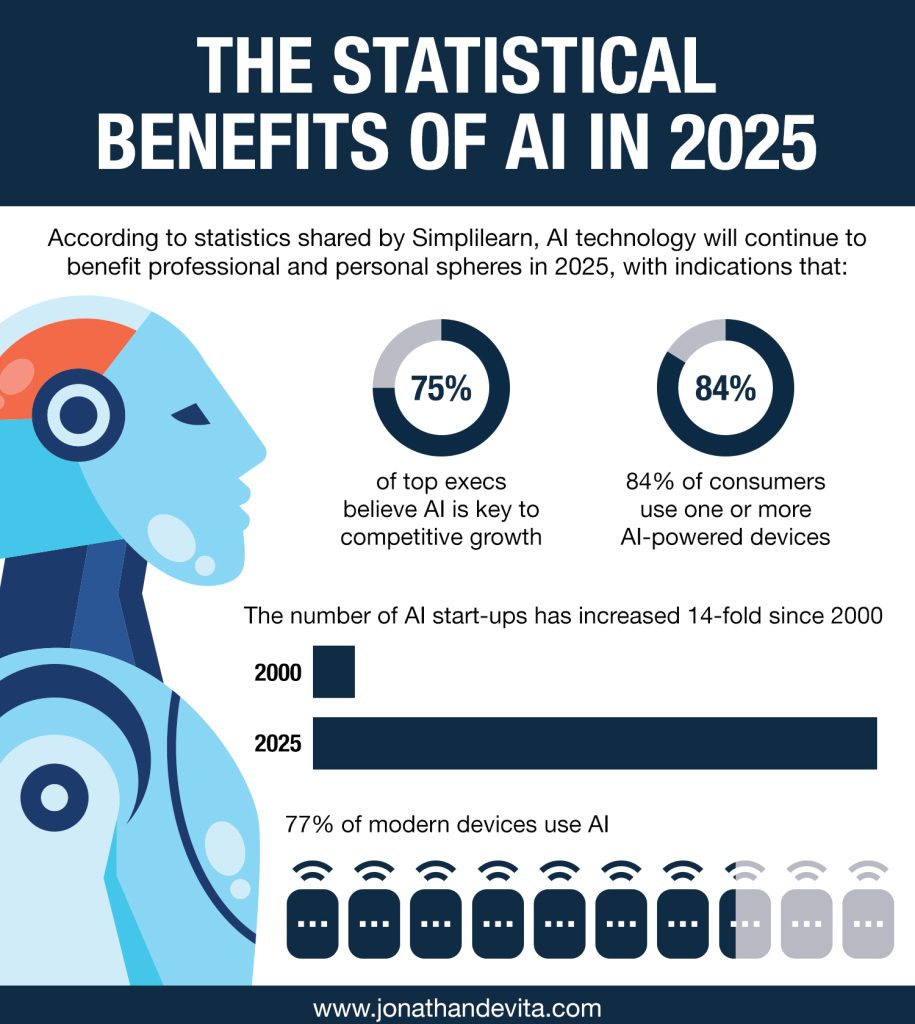
The biggest growth is happening in the business sector, with AI making it easier than ever for companies to gather, process and interpret data. When programmed accurately, AI models can handle large-scale data and present error-free results, streamlining workflow processes and making it easier for businesses to multitask. They can also be used for much simpler tasks, like automating email responses to free up human labour for other things.
However, this doesn’t mean that business-consumer interactions will stagnate. AI assistants and chatbots are improving, and they’re great assets for companies to invest in. They create personalised algorithms to track consumer behaviour online, putting customers back at the centre of business. People are more likely to engage with businesses that offer an elevated experience, and AI has become an easy way to do that.
Individuals are now turning more to AI for very similar reasons. They can rely on these models to do accurate research for them, with each and every result tailored to their needs and preferences. Speech-to-text models allow people to ask questions and receive answers without unlocking their phones. AI can identify things in photos, write down personal plans, send messages and even act as a travel guide.
In these unprecedented times, AI is also playing a positive role in enhancing medical care, opening up new opportunities in jobs, aiding scientific breakthroughs and improving financial cybersecurity. Some of the biggest AI trends for 2025, which include the growth of multimodal AI and an influx of more intelligent virtual agents, promise to continue benefitting humanity as we further harness this incredible tech.
The future of AI requires consistent human engagement and monitoring, but it’s far from the doomsday it is made out to be. When used correctly, AI makes society more equitable, revamping worn-out processes, presenting new opportunities for working people, and tailoring itself to our personal and professional needs – not the other way around.